
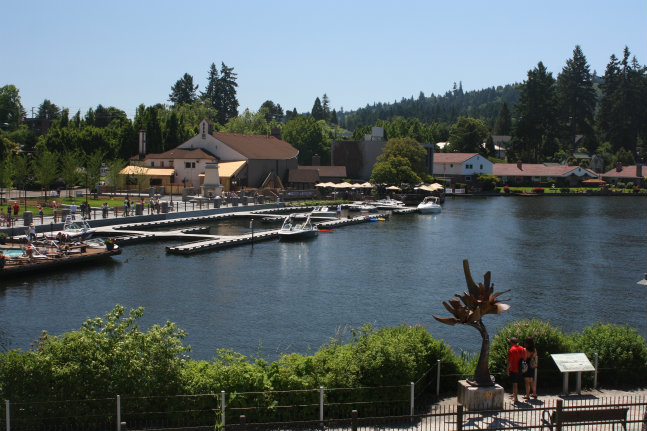
When my wife and I moved to Lake Oswego and bought a home on the Oswego Canal, the lake was considered private. That status dated back to 1942, when the Oregon Iron and Steel Company deeded the bed of the lake—along with certain parcels bordering it and surrounding rim properties—to the Lake Oswego Corporation. The deed limited public access and tasked the Corporation with preserving the lake for the benefit of adjacent property owners.
All Lake Oswego residents had access to the lake at the Lake Oswego Swim Park during the summer and all Lake Oswego residents within the original Lake Grove School boundary, had access to the Lake Grove Swim Park.
As part of that agreement with Oregon Iron and Steel, all Lake Oswego Corporation members pay annual assessments to fund the maintenance of the lake’s infrastructure and water quality. I remember summers when we first moved here—algae blooms were so thick our kids would emerge from the swim park looking like little green goblins. Since then, the Lake Corporation has implemented best practices to improve water quality, including restricting inflow from the Tualatin River, installing aerators, and regularly skimming algae. These efforts have made a noticeable difference.
That private status, however, was challenged in court. A lawsuit argued that Oswego Lake is a navigable waterway and, as such, must be publicly accessible from public land. After 12 years of litigation, the Clackamas County Circuit Court issued a ruling requiring the City of Lake Oswego to allow public access to the lake from Lower Millennium Plaza Park. While the Lake Oswego Corporation is appealing the decision, the City is currently complying with the court’s order.
To manage access, the City has taken steps to ensure safety and education at the designated entry point, including the hiring of a seasonal Park Ranger to enforce rules and provide information through October 31.
Current Public Access Guidelines
- Entry and exit are allowed only via the concrete platforms at Lower Millennium Plaza Park. Use of Sundeleaf Plaza or Headlee Walkway is prohibited.
- Lake access hours are from one hour before sunrise to one hour after sunset.
- Only non-motorized watercraft are permitted at this entry point. Acceptable vessels include:
- Kayaks
- Paddleboards
- U.S. Coast Guard–approved inflatables (up to 18 feet long)
Motorized watercraft—including jet skis, wave runners, trolling motors, and kiteboards—are not allowed.
- Swim buoys or life vests are required at all times when entering the lake.
- Do not leave belongings unattended in the park, including boats, boards, or personal items.
- Access may be temporarily restricted for safety, maintenance, or special events.
In addition, all non-motorized craft must stay within the buoyed area, as motorized boats operate at high speeds outside this zone. This is a crucial safety measure that is sometimes overlooked. Both the Oregon State Police and Clackamas County Sheriff’s Office are authorized to enforce lake regulations.
The City is working collaboratively with law enforcement agencies, the Oregon State Marine Board, and the Lake Oswego Corporation to ensure safe, responsible public use of the lake.
As residents who moved here specifically for lake access and who have invested in its water quality and stewardship for over 35 years, we hope that these changes do not jeopardize the health and safety of Oswego Lake. We encourage all visitors to follow the rules and treat the lake with the same care and respect that property owners have long upheld—so that everyone can continue to enjoy its beauty for generations to come.
Interested in moving to Lake Oswego and enjoying all our community has to offer? Reach out to us – we’d love to put our 35+ years’ experience to work making your next move your best one.
Kevin Costello kevin.costello@cascadehasson.com 503.939.9801
Riley Costello riley.costello@cascadehasson.com 971.322.6205


 52 Reasons to Love Lake Oswego