
Whether you’re a first-time buyer or seasoned homeowner, touring a house can be exciting. But that excitement can also make it easy to overlook important warning signs — both inside the home and in the surrounding neighborhood.
Here are some critical red flags to keep in mind as you walk through homes and evaluate
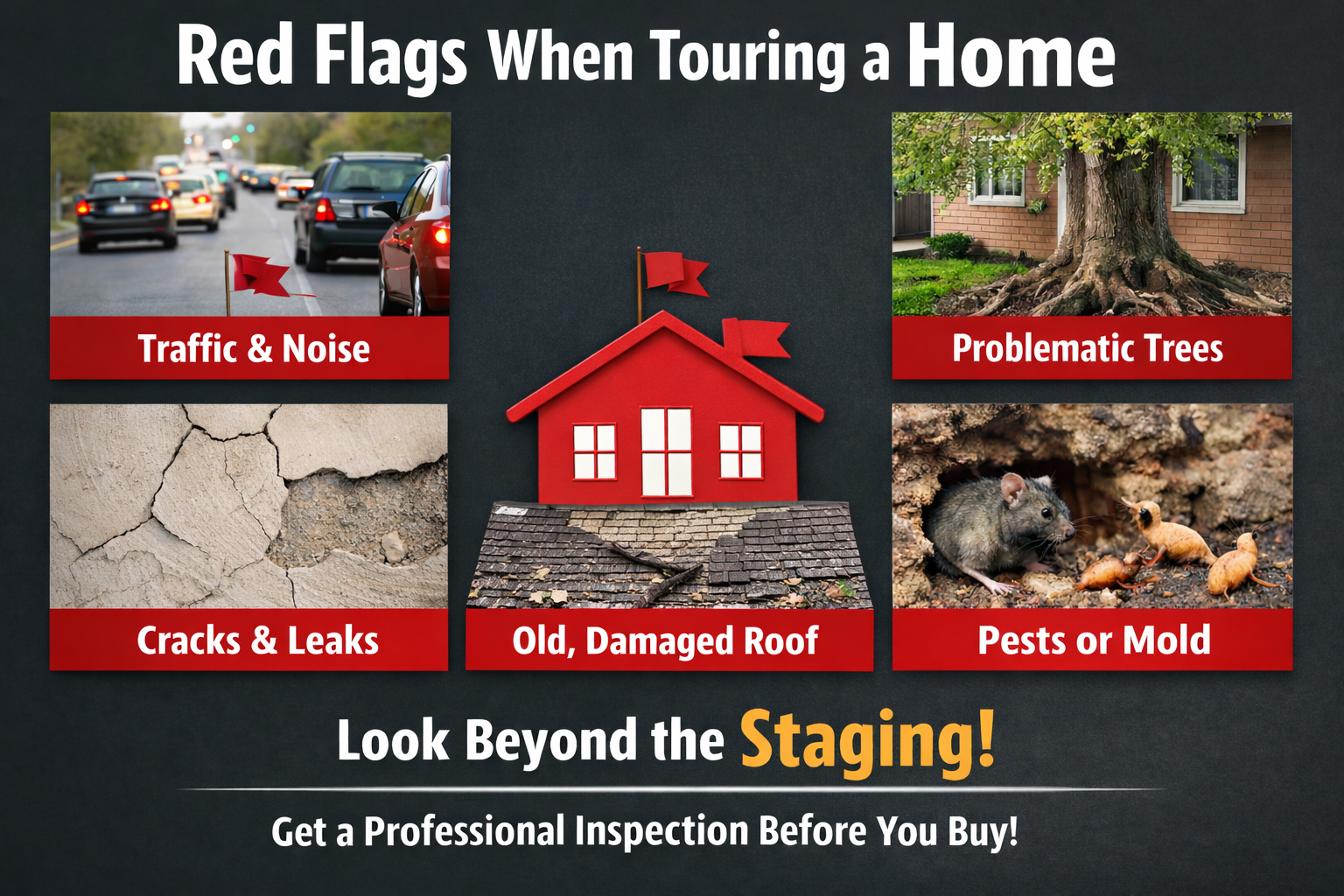
1. Check out the noise factor.
Noise isn’t always obvious on a quick walk-through but it can be one of the biggest “deal breakers” that buyers don’t catch at first. Here are some typical offenders:
- Busy roads, nearby freeways or arterial streets
- Rail lines or freight routes
- Early morning garbage trucks
- Loud neighbor dogs or loud air compressors
- Even airport flight paths
A home might seem peaceful during a scheduled showing — but most experts (including seasoned agents) recommend visiting at different times of the day and on weekends to truly understand typical noise levels. Don’t just take it from us – take it from Barbara Corcoran who said this in speaking to GOBankingRates: “The biggest mistake people make buying a house is that they don’t scope out the property at different times of the day. It’s the only way to catch the loud garbage truck that idles outside at 6 a.m., the party house across the st reet or the dog next door who barks all afternoon. Always go back for another look.”
2. Trees near the home can be beautiful, but could they also be problematic?
Mature trees are one of the great charms of Lake Oswego, but they can also be a source of future costs:
- Tree roots can intrude on foundations, sewer lines, and driveways
- Large overhanging branches pose roof damage risks in storms
- Leaves and debris can clog gutters and cause drainage issues
Before buying, have your inspector evaluate tree proximity and root patterns, and consider checking with an arborist if a tree feels “too close for comfort.”
3. Structural & Maintenance Red Flags Inside the Home
While neighborhood context matters, what you see inside the house can point to big problems:
- Uneven floors, sagging ceilings, or cracked walls can signal foundation issues — expensive to fix.
- Musty odors, mold spots, or staining can hide water leaks or ventilation problems.
- Signs of pests or rodents in basements or crawl spaces suggest hidden damage.
- Deferred maintenance — peeling paint, old HVAC systems, worn roofs — often means larger maintenance will be due soon.
4. Use your senses during a tour
Some of the best red-flag indicators are subtle:
- A home that’s over-staged with smells or heavy candles may be covering real issues.
- Windows that don’t open easily or feel drafty can point to poor insulation or foundation shifts.
Sense beyond the staging and ask questions like: “Do I feel any drafty areas?” “Any lingering unpleasant odors?”
5. Always partner with professional inspections
No matter how perfect a home looks, a detailed home inspection is critical — especially for things you can’t see with the naked eye.
A good inspector can catch:
- Foundation, roofing, plumbing, or electrical issues
- Hidden water damage or mold
- HVAC wear
- Tree root impacts
- Drainage problems
Skipping this step or doing it only sometimes leads to costly surprises down the road.
6. Pay close attention to power lines and utility structures
While not usually an issue in Lake Oswego, it can be in neighboring communities like Tualatin and Beaverton. Homes located near large power lines, transformer boxes, or other utility infrastructure may come with downsides that aren’t immediately obvious:
- Some buyers are sensitive to the visual impact and potential for decreased resale value.
- Certain types of overhead lines can also contribute to electromagnetic field (EMF) concerns, which matter more to some buyers than others.
Even if there’s no immediate health risk, it’s worth understanding how proximity to power lines might affect your day-to-day enjoyment or future marketability. An experienced agent can help you research utility easements and typical buyer perceptions.
Final Thought
Buying a home is one of the biggest financial and emotional decisions you’ll make — and the difference between a good decision and a regret often comes down to knowing what to look for beyond beautifully staged rooms. Being thoughtful about noise, mature trees, and all of the traditional structural red flags helps you make a choice that supports your lifestyle and your investment goals.
If you’re considering a home in the Lake Oswego area and want a professional to help you spot these red flags before you fall in love with a house, we’d love to be your guides — let’s talk!
Kevin Costello kevin.costello@cascadehasson.com 503.939.9801
Riley Costello riley.costello@cascadehasson.com 971.322.6205


 52 Reasons to Love Lake Oswego